WHEN TO COLLECT
Watch the seedheads
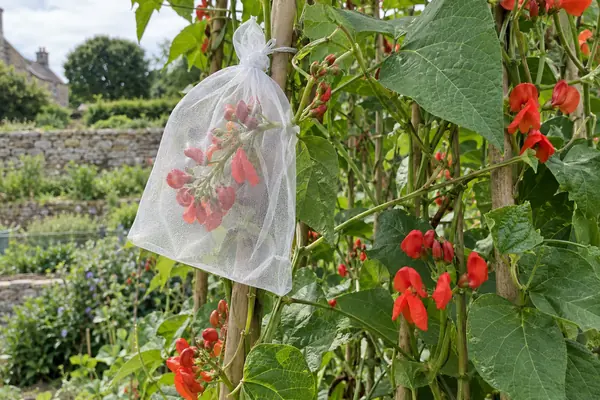
Ripe seedheads often turn from green to brown, black or red. Pick them on a dry day before they open and shed their seed.
Four steps doodlesaver
SEED SAVING, IN PLAIN ENGLISH
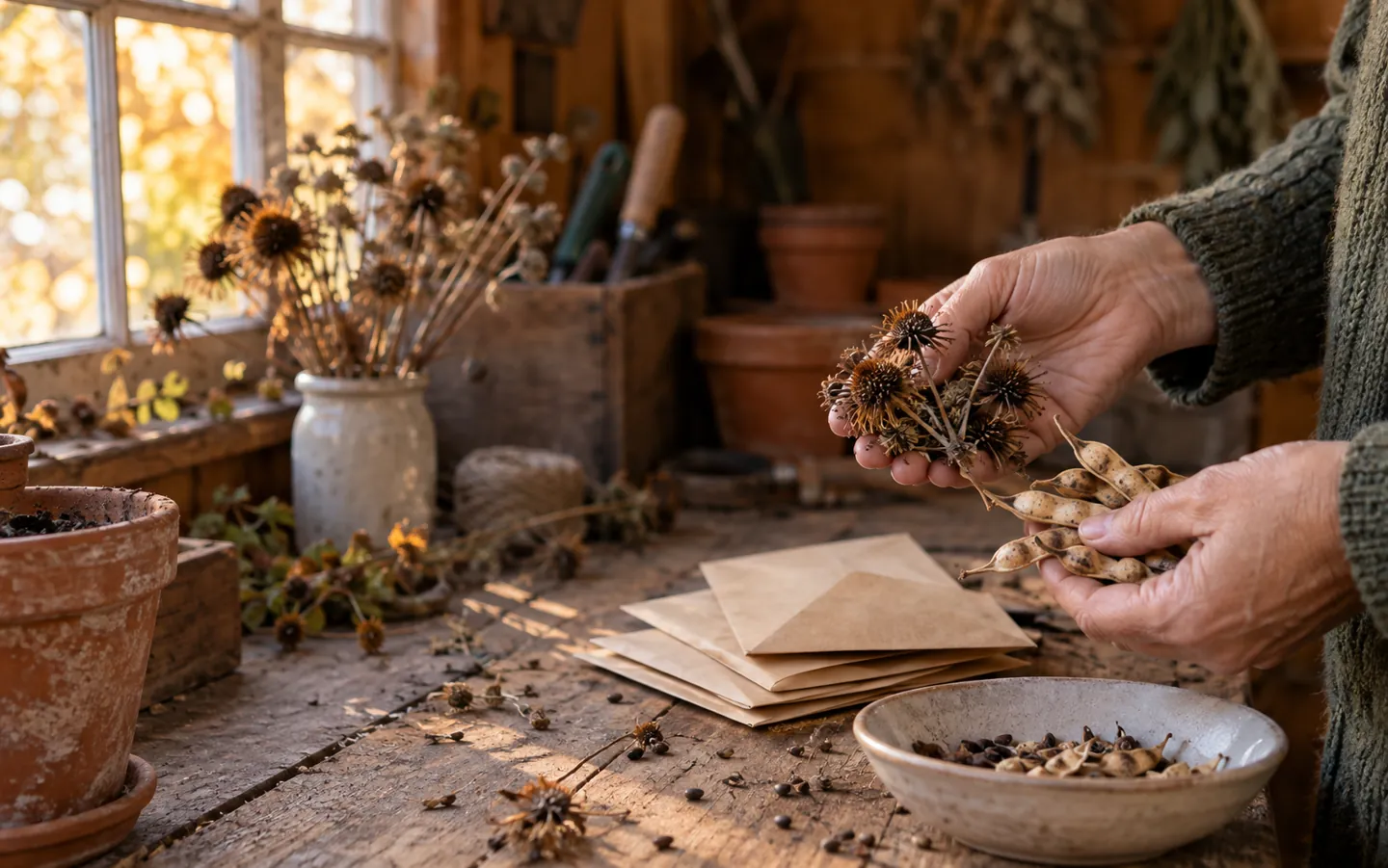
A ripe seedhead is a free packet of seeds, if you catch it in time.
The RHS says seed is set about two months after flowering. Collect it dry, keep it cool, and choose the right plants: only some come true from seed, and F1 hybrids do not.
≈ 2 months from flower to seed
Check a cropTHE SHORT ANSWER
Seed saving is mostly timing and storage.
The rest is knowing which plants will come true.
WHEN TO COLLECT
Ripe seedheads often turn from green to brown, black or red. Pick them on a dry day before they open and shed their seed.
Four stepsTRUE TO TYPE
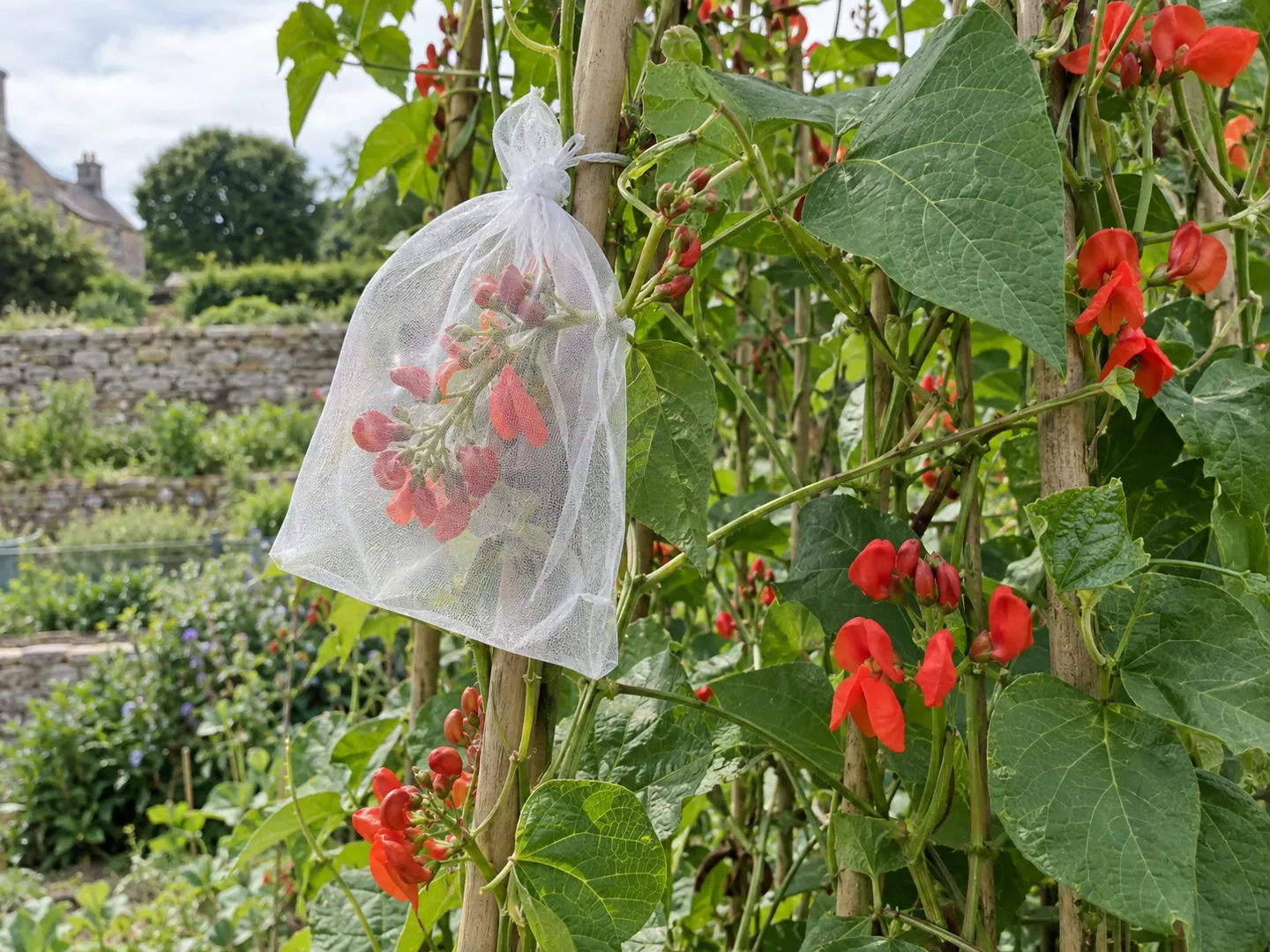
Save from open-pollinated varieties, not F1 hybrids. Crops such as brassicas and runner beans cross easily, so keep varieties apart.
Check a cropSTORAGE
Garden Organic's rule of thumb: storage life doubles for every 5°C drop in temperature and 1% drop in moisture content.
See the numbers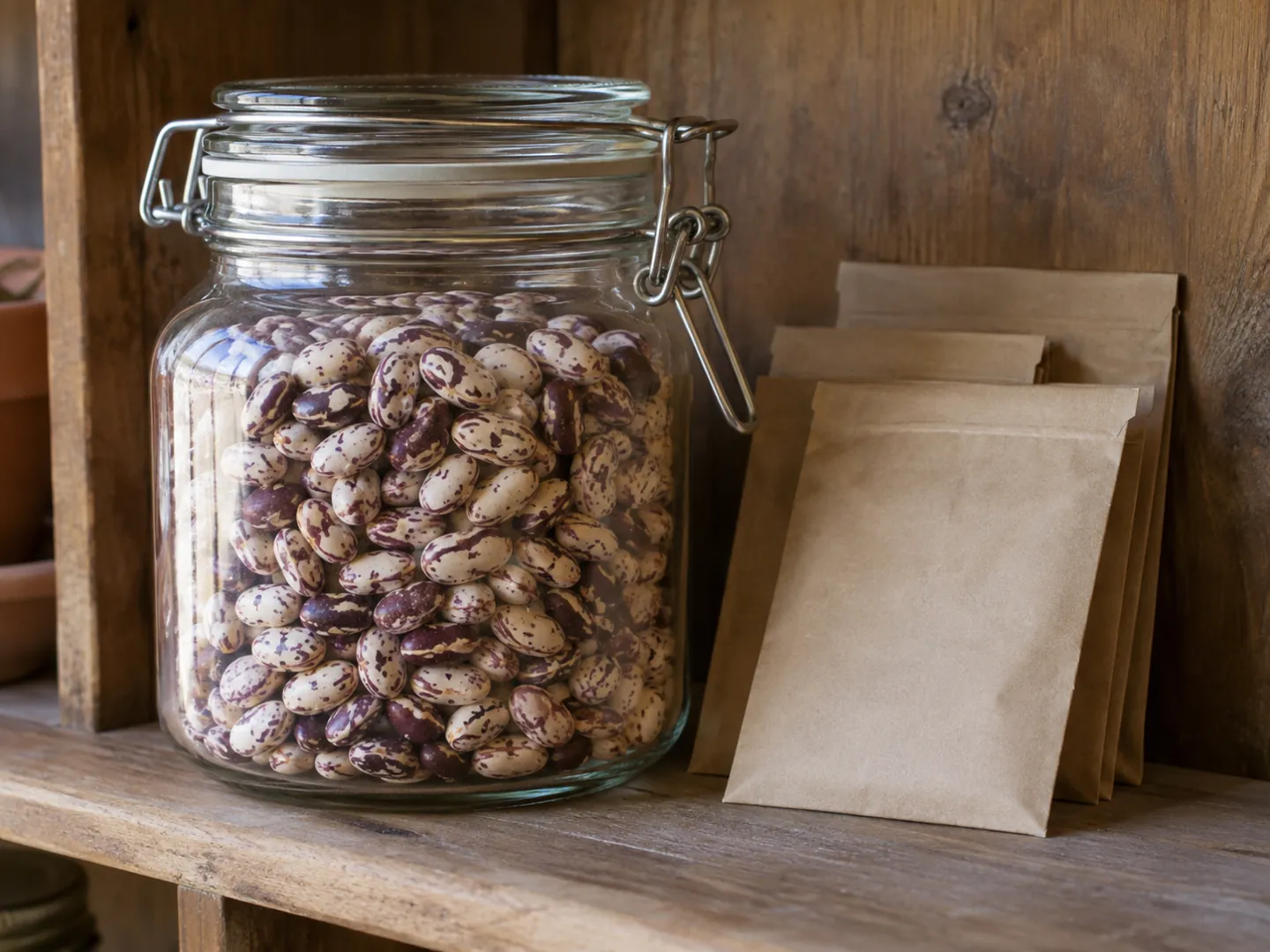
FOUR STEPS TO SAVING SEED
The RHS rates seed collecting as easy to moderate. Most of the work is in timing and keeping things dry.
Collect from healthy, vigorous plants on a dry day. If the plants are in a street or park, ask the gardener or owner first.
Pick seedheads as they change colour, before they open. For exploding seedheads, place a bag over them and shake.
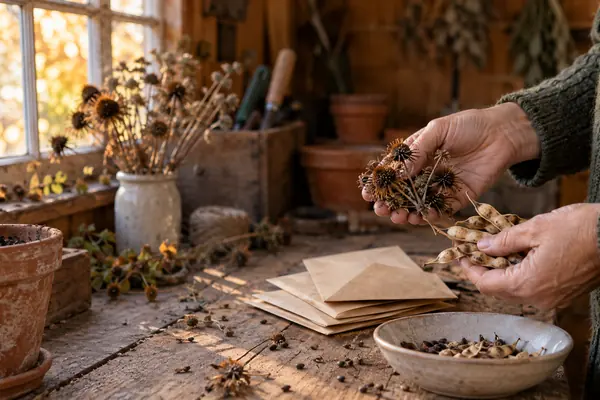
Lay seedheads out to dry, then remove the chaff, which can harbour moulds, pests and diseases. Mash berries in a sieve and rinse away the pulp.
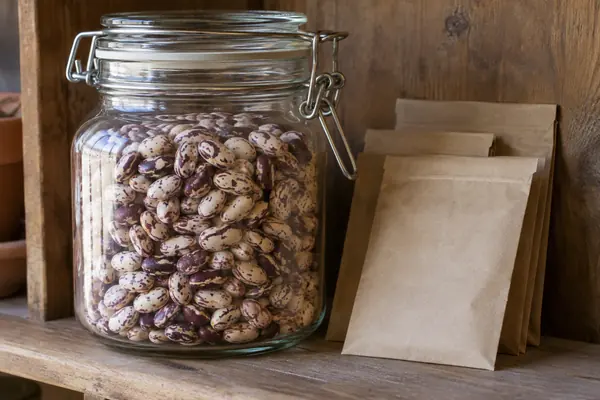
Keep dry seed in labelled paper packets in an airtight container in a cool place. A fridge at 5°C keeps most seed viable for many years.
TWO NUMBERS WORTH KNOWING
One rule of thumb for storing seed,
one figure from a library that keeps seed alive.
2× longer
Seed storage life, for every 5°C cooler and 1% drier
Moisture is probably the most important factor: a dry seed lasts much longer at room temperature than a moist seed in the fridge. Fresh seed can be 10 to 15% water; drying to around 5% prolongs its life.
STORAGE · GARDEN ORGANIC
800+
Varieties held, many no longer sold
The library holds rare landrace and heirloom varieties and others no longer available to buy. Home growers can help by becoming seed guardians and growing seed for it.
HERITAGE SEED LIBRARY · GARDEN ORGANIC
Garden Organic warns that heat destroys seeds: they should never be exposed to temperatures above 35°C. Some seed, such as parsnip, should always be used fresh.
A QUICK CROP CHECK
Pick a crop. The bar shows how much care it takes to save seed that grows like its parent.
Based on Garden Organic's Heritage Seed Library guidance and the RHS.
WHEN NOT TO DRY
The RHS says some seed, such as hellebore, is best sown immediately, because it loses viability in storage. Most seed germinates best if sown as soon as it ripens.
Others must not dry out at all: walnuts, oaks and magnolias can be kept in a plastic bag of damp vermiculite or sand for several months. When taking stored seed out, Garden Organic suggests letting the jar reach room temperature before opening.
Questions
As a rough guide, seed is set about two months after flowering. Collect on a dry day as the seedheads change colour, before they open and shed their seed.
You can, but it will not come true. The RHS says seedlings from a hybrid will be extremely variable, so save from open-pollinated varieties.
Dry it, then keep it in labelled paper packets in an airtight container somewhere cool and dry. A fridge or freezer will keep it for longer.
Garden Organic says it is impossible to say exactly. Germination falls after the best storage time, but old seed is still worth trying before you throw it away.
Some plants are sterile, and in species like holly, male plants never bear seed. Seed production can also vary from year to year with the weather.
Updated
ABOUT THIS NAME
It is not open for bids or leasing right now. Browse the catalogue for names you can bid on or lease today.